
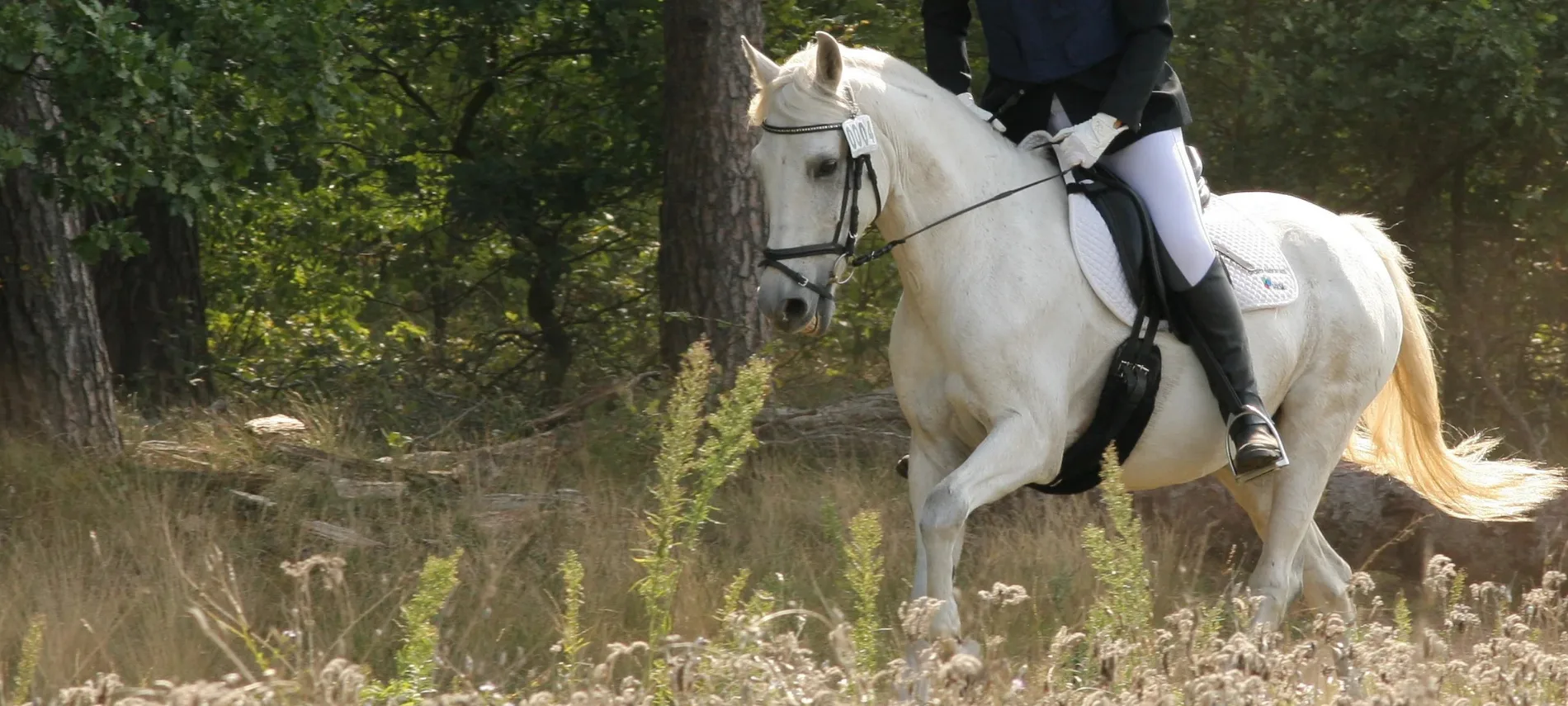
Short answer:Ponytail hair jewelry uses carefully selected, cleaned and braided mane or tail hair to create personalized bracelets, pendants, rings or accents. The technique has a long history in sentimental jewelry and, today, can be combined with gold and laboratory gems to create contemporary pieces.
Anyone who lives with horses knows the importance of minimal gestures: cleaning a saddle, checking a girth, picking up the mane from the tail, recognizing a step before seeing it. In that universe, horse hair is not perceived as a simple material. It can be a physical trace of a bond built with training, patience, fear, trust and time.
A piece of jewelry with ponytail hair allows that mark to leave the block without losing its origin. It can be visible braiding, a minimal line on a gold clasp, or an item protected under glass. You don't have to say goodbye: you can also celebrate a horse in life, a sporting achievement, a recovery, a work relationship or a family milestone.
A tradition with centuries of history
The custom of turning hair into sentimental objects is not new. The Cooper Hewitt, Smithsonian Design Museum explains that the use of hair as a structural component of jewelry became popular in the 18th century and that, by the 1830s, pendants, brooches, earrings, necklaces and bracelets were made from human and horse hair in England and the United States.[^1]
The story is not just decorative. Hair has physical qualities that made it useful for braiding and weaving: length, shine, flexibility, and relative strength. Bracelets made from dyed horse hair, woven and worked into floral shapes are preserved in collections of the British Museum, proof that the material could achieve notable ornamental complexity.[^2]
In contemporary equestrian culture, the technique retains a special value because the horse is usually associated with a relationship sustained over time. The jewelry does not replace the experience of riding or turn that relationship into an object; offers a way to bring a material part of her into an everyday context.
Why is the tail hair used and not just any lock?
The tail usually provides longer and more consistent fibers that allow continuous braiding. The mane of the tail can have different thicknesses, textures and shades; Those variations are part of its visual identity. A gray, black, sorrel or bay horse can offer very different light combinations even within the same tail.
To work the material well, it is necessary to select clean and sufficiently long strands. The exact amount depends on the type of piece: a braided bracelet needs more length and volume than a detail encapsulated in a pendant. It is not advisable to cut at random or collect a strand that is too short. A professional can guide you on the amount before making any cuts.
The extraction must be done without harming the animal. In many cases, hair can be collected gradually during grooming or a discreet portion of the lower part of the tail can be trimmed, respecting the horse's well-being and appearance. The intention of creating a piece of jewelry does not justify causing discomfort or unnecessarily disturbing its care.
The artisanal process: from fiber to a jewel
The first step is cleaning. Hair should arrive free of mud, oils, shine products, dust and plant debris. It is then sorted by length, color and quality. In some designs the natural gradient is preserved; In others, specific shades are selected to obtain a more uniform result.
Braiding can take on many structures: round, flat, herringbone, cord, more compact weave or combinations with supporting thread. The decision depends on the necessary resistance and the aesthetics sought. Visible braiding is usually the star of high-quality bracelets and keychains; finer braiding can be integrated into gold pieces or a protected capsule.
The closure is not a minor detail. It has to keep the fibers contained, prevent fraying, and support movement. The ends are carefully prepared before attaching to metal components. A good finish prevents the hair from being tight, twisted or exposed to unnecessary friction.
Designs that work especially well
Personalized equestrian bracelets
The bracelet is the best-known format because it allows the braiding to be the protagonist. It can have clasps in silver, yellow gold, white gold or steel, depending on the style. A small laboratory diamond, a blue sapphire or an engraved initial can provide a point of light without displacing the prominence of the hair.
Pendants with a braided section
A pendant allows you to protect a small part of hair under glass or within a gold frame. It is a suitable solution for those who want a more discreet piece or for families who want to divide the same sample among several pieces of jewelry.
Rings with equestrian detail
In a ring, the hair is usually not the most exposed part of the design. It can be integrated into a protected area, in a small sealed channel or as chromatic inspiration for the chosen gem. The ring works well when looking for an everyday piece and the equestrian aesthetic should be suggested, not literal.
Cufflinks, barrettes and men's pieces
Men's accessories allow for contemporary interpretations: cufflinks with an encapsulated hairline, tie clips with a stone related to the horse, or sober bracelets with leather and a mane detail. They are interesting formats for owners, riders, trainers and family members who do not usually wear traditional jewelry.
The combination with laboratory gems
A braided ponytail can coexist with a laboratory gem without losing authenticity. The contrast between organic fiber and glass offers a contemporary reading: equestrian tradition and materials science in the same piece. Laboratory diamonds share chemical composition, crystalline structure and essential properties with natural diamonds, although they are generated through technological processes.[^3]
The gem doesn't have to be big. Often a small point of light is enough to elevate the piece and make the design perceived as jewelry, not just craftsmanship. A blue sapphire can dialogue with the universe of competition; a ruby, with a more intense energy; a white diamond, with a clean and timeless aesthetic.
Sakti Atelier works on this combination from a premium jewelry language: horsehair is not treated as an accessory ornament, but as a material with history that is integrated with gold, design and a consciously chosen gem.
How to preserve horse hair jewelry
Hair is an organic material and requires different care than a solid gold chain. Avoid submerging a braided bracelet in water, wearing it in the pool or sea, applying perfume, exposing it to intense sweat repeatedly, or storing it wet. Moisture, cosmetic residue and friction can affect its appearance over time.
For everyday cleaning, a soft, dry cloth is usually sufficient. If the hair becomes messy, don't try to pull the fibers or use harsh brushes. Consult the craftsman or jeweler who made the piece. Metal components may require different cleaning, so specific design recommendations should be followed.
Store the jewelry extended or with a gentle curvature, avoiding extreme bends. A lined box or separate cloth bag will help protect the braiding from rubbing and snagging.
What to ask before ordering a piece of mane jewelry
- What length and amount of hair is needed for this design?
- How should the sample be prepared and shipped?
- Will tones be mixed or will the natural color be respected?
- What type of braiding will be used and how is the end protected?
- What metal, closure and warranty does the piece include?
- What care does it need and can it be repaired in the future?
- How much of the excess mane is returned or kept?
These questions turn an emotional assignment into a well-defined project. They also help compare proposals without reducing the decision to price.
Related Frequently Asked Questions
Yes. In fact, many pieces are created as a celebration of a present relationship. It is enough to obtain a sample in a respectful manner and following the length and cleanliness instructions.
It may deteriorate if exposed to water, cosmetics, traction or continued humidity. With a well-finished design and proper care, it can be preserved for a long time.
Yes. Mixing shades or swatches can be a beautiful way to represent a team, equestrian family, or several important horses. The design should anticipate what that combination will look like.
It can be, but it doesn't have to be the only option. Some people prefer a piece of jewelry with a visible strand; others choose a gem, an engraving or a more discreet piece. The best choice is the one that feels respectful of the bond.
Tradition that continues to move
Ponytail hair jewelry unites a historical technique with a current sensibility. They are capable of preserving the tangible—a fiber, a color, a texture—and turning it into a piece that travels with the wearer. In an equestrian relationship, where trust is built daily, that continuity can have very deep meaning.
Sources
- Cooper Hewitt, Horsehair Jewelry
- British Museum, woven horsehair bracelet
- GIA, More Info About Laboratory-Grown Diamonds
- Reference:History of equestrian jewelry.
- Atelier Process: See Sakti Process
- Main Category: Sakti Guide
Suggested Articles:
Create a memory that will last a lifetime
Discover the personalized design and assembly process in our atelier.
Let's talk to the Atelier