Fine jewelry is no longer defined solely by the geological rarity of a stone. It is also recognized in the quality of the design, the technical mastery, the selection of materials, the manufacturing time, the ability to repair a part and the transparency with which its origin is explained. In this context, laboratory-grown gems occupy a place of their own: they are not an imitation of a natural gem, but a material with specific characteristics that can form part of an exceptional piece of jewelry.
Short answer
A high-end laboratory jewel combines a correctly identified and evaluated gem, a design designed to last, noble metals, artisanal setting, careful proportions and verifiable documentation. Luxury does not depend on claiming that a lab-grown gem is identical to a mined stone in all commercial respects; depends on accurately explaining its origin, its quality, its manufacture and its long-term use value.[^1][^2]
Luxury has gone from scarcity to intention
For decades, the traditional story of jewelry was based on scarcity: a material extracted from a remote place, a stone that was difficult to find, an object reserved for a few people. This component continues to exist in fine jewelry of mining origin, but today it coexists with other criteria. Luxury buyers are looking for design, craftsmanship, personalized service, traceability, repair and a more informed relationship with materials.
Bain & Company noted that jewelry was one of the most resilient categories of personal luxury in 2024, in a context where the sector sought to reconnect with the consumer through quality, creativity and perceived value.[^3] That resilience does not mean that any expensive piece is high jewelry. It means that jewelry retains a special capacity to condense identity, celebration and legacy.
A cultured gem can participate in this logic when the work around it has a level: good cut, demanding selection, suitable metal, secure setting, precise finishes and clear documentation.
What is a laboratory gem and what is not?
A lab diamond is a diamond created using controlled growth processes, primarily HPHT or CVD. It is not a cubic zirconia or a moissanite; Those are different materials with different properties. GIA explains that laboratory diamonds can be distinguished from natural diamonds through specialized analysis, although they share the crystalline carbon composition and many relevant physical and optical properties.[^1]
Precision in language matters. The US FTC states that advertising must clearly communicate that the diamond is created or grown in a laboratory and not mined.[^2] Elegant communication does not need to erase that difference. On the contrary, it integrates it: a high-end laboratory jewel holds up better when it does not try to look like something else.
Nor is it worth promising that all cultivated gems are “sustainable” by definition. The environmental impact depends on energy consumption, the source of electricity, the technology, the performance of the process and the production chain. Ethics are not demonstrated with a generic label; It is demonstrated with specific information, with identifiable suppliers and with statements proportional to the available evidence.
The gem: quality before size
In high-end jewelry, a stone is chosen for its set of qualities. The 4Cs—cut, color, clarity, and weight—are the standard language for evaluating diamonds.[^4] However, reading a 4C sheet does not automatically equate to understanding how a gem will look in a piece of jewelry.
Size and proportions
The cut determines how light enters, bounces off, and leaves the stone. A gem with high color and clarity parameters may look less vivid if the cut is not well resolved. In round brilliants, the balance between brilliance, fire and scintillation is usually especially valued. In fantasy cuts, such as oval, pear, emerald or cushion, it also matters how the silhouette, light windows and symmetry are perceived.
Color and clarity
The color scale describes the presence or absence of hue in colorless diamonds. Clarity evaluates internal and external features, typically under 10x magnification. In a well-chosen gem, the goal does not have to be a maximum graduation: it can be a stone that is visually clean, proportionate to the design and consistent with the budget.
Weight and visual presence
The carat expresses weight, not diameter or beauty. Two diamonds of the same weight can have different apparent sizes due to shape and proportions. In fine jewelry, the visual presence is also made up of the height of the setting, the width of the ring, the distribution of side gems and the contrast with the metal.
The gemological report: a basis, not the whole story
Independent certification is not a documentary accessory. It is a way of knowing what has been purchased. IGI, for example, explains that its laboratory diamond reports identify the origin of the gem and detail characteristics such as measurements, shape, 4C, and, when applicable, information on growth method or treatments.[^5]
Before purchasing a piece, it is advisable to ask for:
- The name of the laboratory issuing the report.
- The report number and how to verify it.
- The description of the origin of the gem.
- The 4Cs and measurements.
- Comments on treatments if the report includes them.
- Information on laser inscription when it exists.
It is important to understand the limit of this document. A gemological report evaluates a gem. It does not automatically certify the quality of the design, the ethical origin of the entire chain, the durability of the setting or the personal history associated with a commemorative jewel. It is a centerpiece of transparency, not its complete substitute.
Metal and setting: where the craft is recognized
An excellent stone can lose presence in a poorly resolved setting. That is why high jewelry is also appreciated in what is not seen at first glance: the correct thickness of the metal, the regularity of the claws, the inner comfort of the ring, the stress points, the finish of the back and the accessibility for cleaning and inspection.
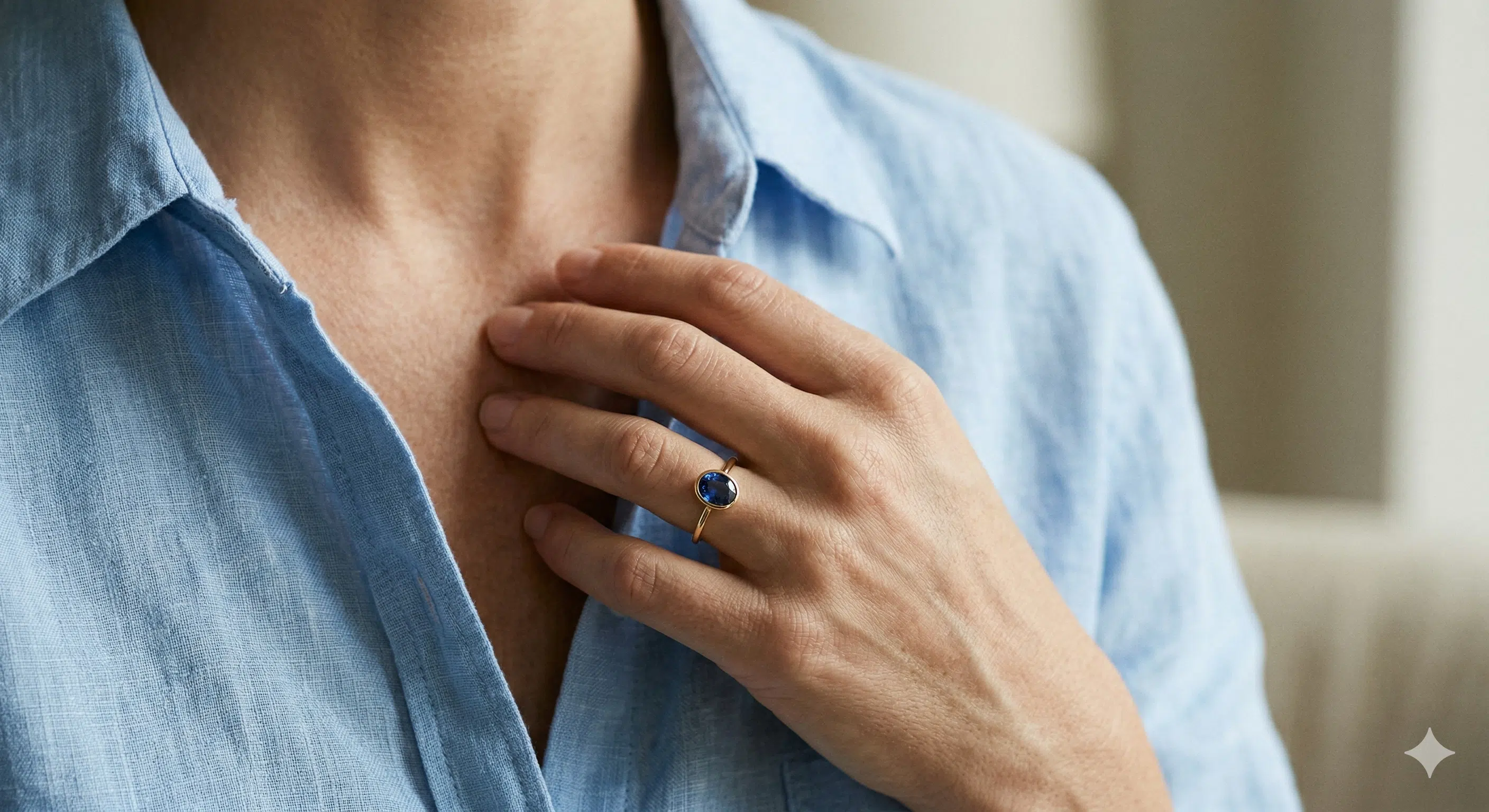
18-karat gold is common for its balance between nobility and resistance. It allows different tones—yellow, white and pink—and a wide variety of finishes. Platinum is prized for its density, natural white hue, and performance in precision settings. The choice is not a competition: it must be at the service of the stone and its use.
The type of setting also transforms the personality of a gem:
- Claws:They let in a lot of light and make the stone visible.
- Bezel:It partially or completely surrounds the gem and offers a feeling of protection.
- Pavé:Incorporate small nearby stones to multiply shine.
- Tension or semi-tension:It creates a contemporary aesthetic, but requires very precise design.
- Lane:protects stones in line and works well in alliances.
A high-level jewel is not one that has more metal or more stones. It is the one that maintains proportion, security and clear visual reading.
Contemporary design: less spectacle, more permanence
Contemporary luxury often moves away from excess that ages quickly. A piece can be eye-catching and still have a quiet structure: a well-chosen center stone, a clean band, a detail of unexpected proportion, or an inscription known only to the wearer.
This approach is especially relevant in commemorative jewelry. The design does not have to explain the story to others. You can save the meaning for its owner. A colored gem, a specific cut, an inner number, or a curve inspired by a silhouette can have more depth than a literal symbol.
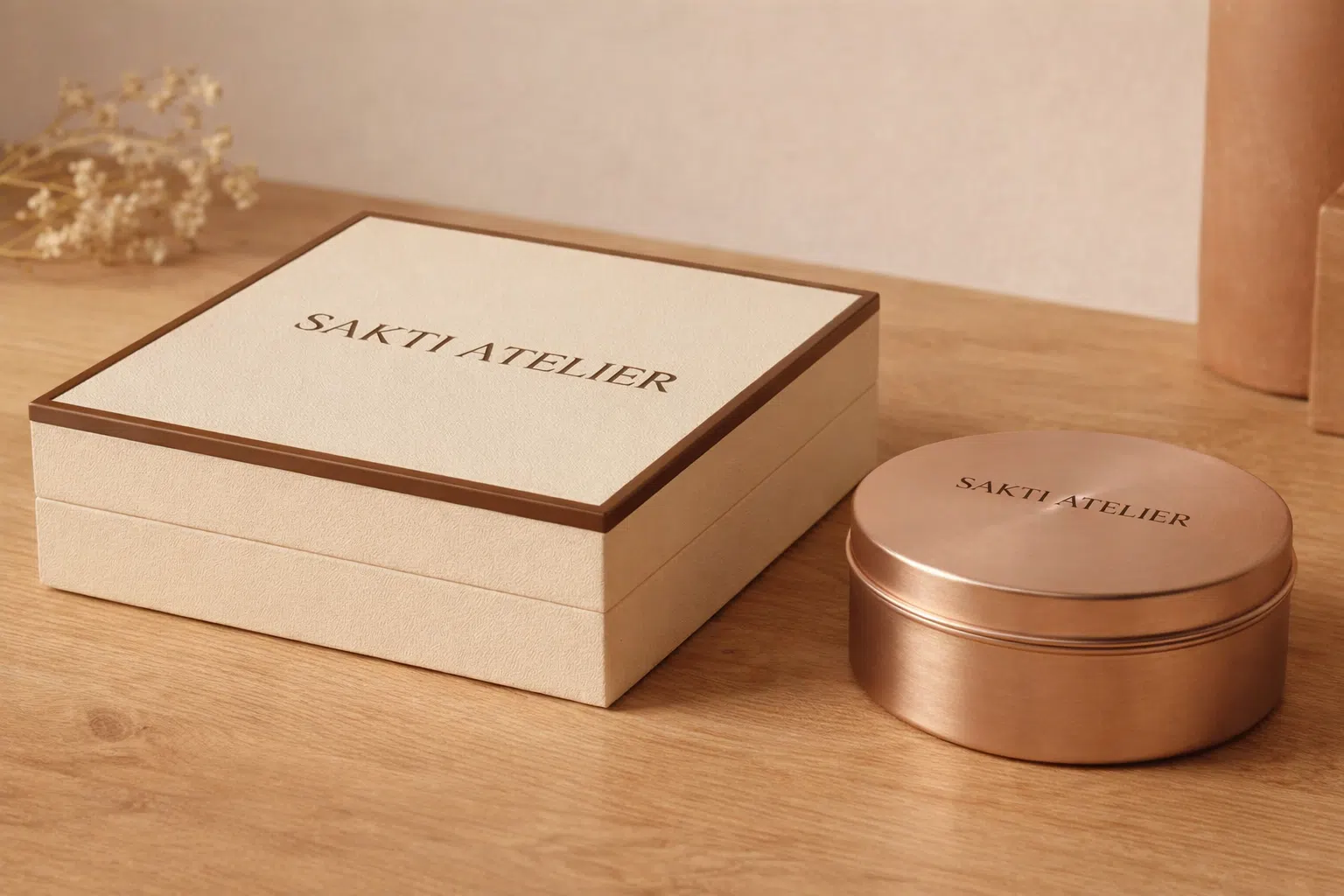
Sakti Atelier works on this idea through personalization: a laboratory jewel can be technically precise and visually sober, without being reduced to a standard object or turning an intimate story into an displayed message.
Sustainability: how to talk about it rigorously
A laboratory jewel can avoid the direct mining extraction associated with a natural gem, but this does not mean it is free of all traces. Growing diamonds requires energy, equipment, materials and logistics. For this reason, it is advisable to be wary of terms such as “zero impact”, “eco by definition” or “conflict free” if they are not accompanied by verifiable information.
A responsible conversation with a provider may include these questions:
- What country and what laboratory produced the gem?
- Is there information on the energy source or environmental certifications of the producer?
- How is the gem transported and what documentation is provided?
- What metal is used and what information is provided about its origin or recycling?
- Does the brand use verifiable or generic environmental claims?
The answer may not be perfect, but it must be honest. The strongest sustainability is not a promise of absolute purity: it is a practice of improvement, traceability and rigorous communication.
High jewelry to wear, not just to store
A piece with emotional and material value must also be designed for real life. Ask if the ring can be changed in size, if the setting can be checked, if the pendant has a secure closure, if the chain allows for length adjustment, and if the firm offers cleaning or maintenance. An exceptional jewel is not defined only by the day of its delivery; is confirmed over the years.
Daily care is simple, but important. Remove rings and bracelets when playing sports, riding a horse, cleaning with chemicals, going to the pool or handling weight. Store jewelry separately and check settings if you notice movement in a stone. In the case of diamond pieces, the brilliance is usually restored with professional cleaning and proper maintenance.
How to evaluate a high-end proposal
Before you decide, check out this list:
| Criterion | Good practice sign |
| Gem | Verifiable report, clear description and understandable 4Cs |
| Design | Sketch or render, measurements and conversation about use |
| Metal | Declared purity, finish and maintenance explanation |
| Setting | Safety, review and possibility of repair |
| Personalization | Real options without pressure to add elements |
| Documentation | Invoice, report, part and care sheet |
| Transparency | Exact language about laboratory origin and sustainability |
The price must be able to be understood in this set. A gem may have a specific cost, but the value of a high-end piece incorporates time in design, selection, manufacturing, setting, finishing, quality control, documentation and after-sales. Comparing carat weight alone leaves out an important part of what you are buying.
Related Frequently Asked Questions
Yes, when it meets quality criteria in gem, design, metal, craftsmanship, finish, documentation and service. Laboratory origin does not prevent high-level execution; must be communicated clearly.
No. The visible shine depends on the material, size, polish, cleanliness and proportions. In diamonds, the quality of the cut is especially important for light response.
The report helps identify the gem and document its characteristics. The resale value of any jewelry depends on many factors, such as market, demand, metal, brand, condition, design and current conditions. It should not be promised as a guaranteed investment.
There is no universal hierarchy. For a piece that will be worn often, a good combination of size, cut, metal, setting and comfort often brings more satisfaction than maximizing a single piece of information.
Sources
- GIA — Differences between natural and laboratory diamonds.
- FTC—Advertising Diamonds, Gemstones and Pearls.
- Bain & Company — Luxury in Transition: Securing Future Growth.
- GIA — The 4Cs of diamonds.
- IGI — Laboratory Grown Diamond Report.
- Reference:Bain & Company.
- Atelier Process: See Sakti Process
- Main Category: Sakti Guide
Suggested Articles:
Create a memory that will last a lifetime
Discover the personalized design and assembly process in our atelier.
Let's talk to the Atelier