
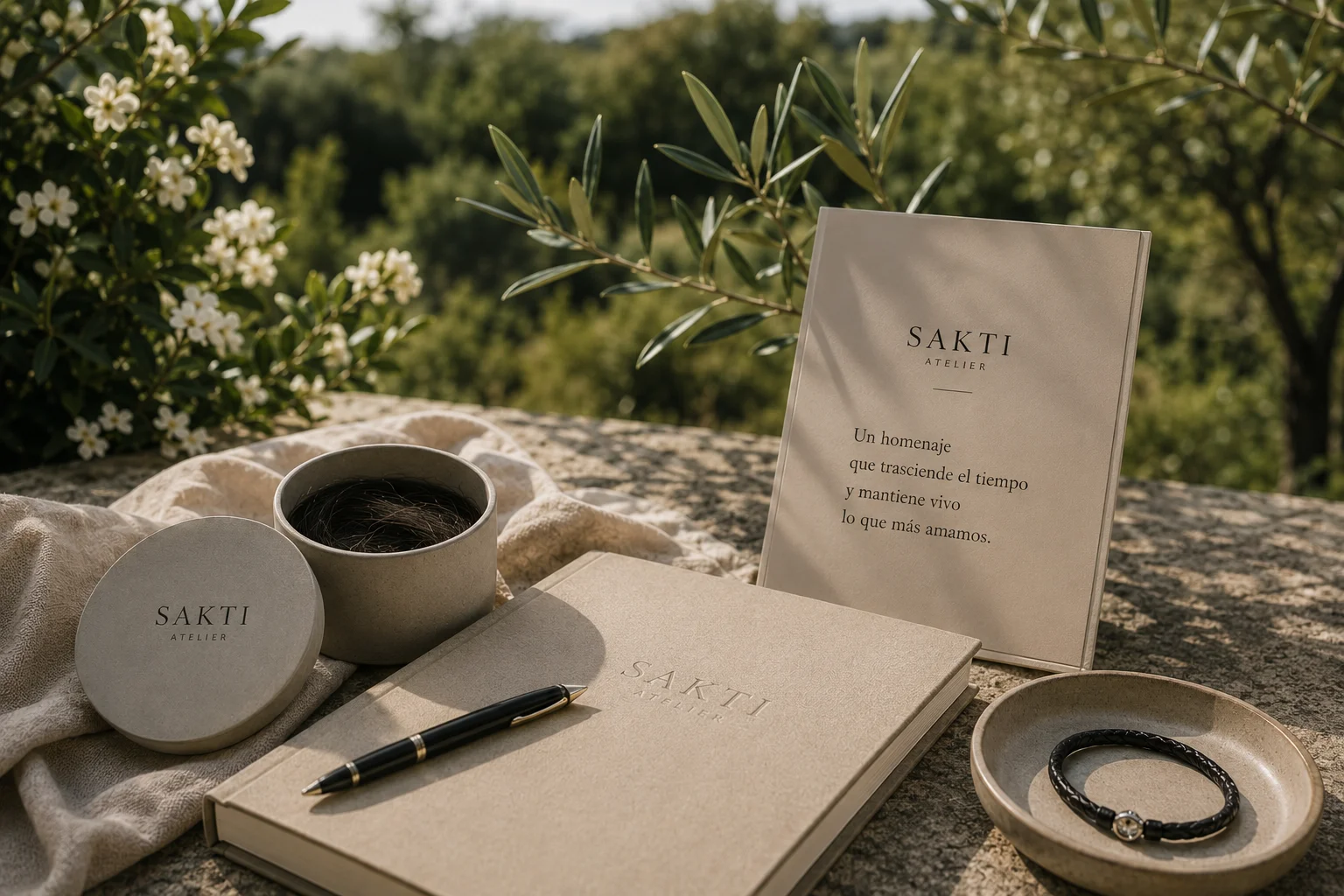
A good commemorative tribute is built in five steps: defining the meaning you are looking for, knowing exactly what material will be used and what can be certified, choosing a piece of jewelry that fits your daily life, confirming deadlines and traceability, and leaving room to change your mind before closing the design.
Planning a memorial piece of jewelry may seem like a practical decision—choosing a gem, a metal, and a design—but it is rarely a practical one. In many cases it comes in the midst of grief, an anniversary, a recent farewell or the desire to celebrate a life that is still present. That's why it's a good idea to treat it as what it is: a personal process that can be organized clearly, without turning it into a race or burdening it with unnecessary pressure.
A piece of memory does not have to resolve pain or establish a correct way of remembering. It can simply be a significant object: something that allows you to touch a story, give rise to a link and carry it discreetly. Planning helps technical decisions live up to that emotional intention.
Start with the intention, not the catalog
Before looking at rings, pendants or colors, ask a simple question: what do I want this jewelry to allow me to feel or remember? It can be closeness, gratitude, continuity, a promise, a shared stage or a way of naming an absence. The answer does not have to be solemn. Sometimes it is enough to think: “I want to wear something that accompanies me every day” or “I want to create a piece that can stay in the family.”
This first definition guides the rest. An intimate keepsake might call for a small pendant, a discreet stone, or a hidden engraving. A story shared by several people may translate best into coordinated pieces, a family gem, or a piece of jewelry that can transform over time. A tribute to an animal that is still alive can be a celebration in life, using a lock of hair saved with consent and care, without having to associate the jewel with a loss.
Putting words to the intention prevents the process from being reduced to comparing technical characteristics. The gem and the metal matter, but they make sense when they respond to a story.
There is no correct calendar for grieving.
Grief does not follow clean stages or an expiration date. The American Psychological Association explains that reactions to a loss can vary significantly between people, and public health resources remind that emotions, changes in sleep, energy or concentration may appear. It is not necessary to wait until “it feels good” to think about a piece of jewelry, but there is no obligation to decide right away.
There are people who want to start the process a few days after saying goodbye because they need a specific gesture. Others prefer to wait months, a birthday, a symbolic date or the moment when they can look at photos without feeling overwhelmed. Both options are valid. The only useful sign is this: that the choice belongs to you and that it is not born from the haste of others.
If the loss is very recent, it may help to separate the information phase from the decision phase. You can ask for details about options, keep brochures, request a quote and come back later. It is also valid to choose an initial idea and leave the final design open. A careful company should not turn a vulnerable moment into a business emergency.
Choose the material precisely and without ambiguous promises
Different elements can be used in commemorative jewelry: ashes, hair, an existing stone, an inscription, a photograph, a date or a combination of several. Each option has a meaning and limitations. The important thing is to understand exactly what happens with the sample and what each document certifies.
If you are considering creating a lab-grown diamond from commemorative material, ask how much is needed, how the sample is identified, where it is processed, what part of the flow is performed by the lab, and what timelines are realistic. Ask for a clear explanation of the difference between two things: the gemological certificate for the finished stone and the custody documentation for the sample. A report from a gemological entity can describe the gem and confirm that it is a cultured diamond; Commemorative traceability depends on the records of the service that receives and manages the sample.
If ash is physically incorporated into a piece of jewelry, for example under resin or glass, ask about the resistance of the material, its behavior against light, water, shocks and chemicals. If working with hair or mane, ask how the surplus is kept and if it is returned. Trust is not born from words like “unique” or “eternal”, but from procedures explained in detail.
Gather practical information before designing
Calm planning is greatly improved when some basic answers are compiled in writing:
- What sample is accepted, in what quantity and in what condition.
- How it is labeled and stored from receipt to delivery.
- If there is a tracking code or a record of each milestone.
- What document accompanies the gem and what information it contains.
- Where the jewel is made, who carries out the setting and what controls are applied.
- How long the entire process takes, not just the growth or production of the gem.
- What happens to the leftover sample.
- What warranty, maintenance and repair options are offered.
These questions do not cool down the emotional component. They protect him. When a person understands the steps, they can deliver an important sample with greater confidence and focus on the creative part of the tribute.
Design a piece of jewelry that you can actually wear
The ideal jewel is not necessarily the most complex or the largest. It is the one that fits with your routine and with your way of expressing yourself. If you don't usually wear rings, a commemorative ring may end up in a jewelry box. If you live in an environment where you wear gloves, play sports, or work with your hands, a pendant with a clean profile may suit you better. If you want a piece that doesn't draw attention, a small stone in a minimalist design can have more power than an obvious symbol.
Think about four specific decisions:
Type of jewel.Ring, pendant, bracelet, earring or a transformable piece. A family piece of jewelry can even be designed to become two pieces in the future.
Metal.Yellow, white, rose or platinum gold change the tone, weight and maintenance. For frequent use, it is advisable to evaluate both the aesthetics and the security of the setting.
Design.A solitaire lets the gem speak for itself; a bezel protects it and creates a more contemporary contour; an engraving can add intimate information without making the piece explicit.
Scale.A small jewel does not mean a lesser memory. Comfort and frequency of use often give more life to a piece than a size chosen solely for visual impact.
Decide as a family without losing your own voice
When the tribute is shared, the decisions can be very beautiful and also delicate. There may be different views on whether to save all of the ashes, divide a sample, use a gem from an inherited piece of jewelry, or create several pieces. It is not necessary for everyone to have the same relationship with the memory to build something respectful.
A good practice is to talk about values first and then objects. Do we want a piece that is inherited? Do we prefer that each person have their own detail? Does anyone need to keep all the material untransformed? What details truly represent us? This conversation can prevent misunderstandings and allow each member to participate to the degree they are comfortable with.
Sometimes the kindest solution is not to decide everything at once: keep some of the material, create an initial piece and leave a future project open. Memory does not have to focus on a single gem or end on a single date.
Sketch, review and approval
Before manufacturing, request a sketch, render or clear reference. Check hoop thickness, gem height, chain length, clasp and engraving. Confirm what changes are possible before and after starting the process: knowing those limits avoids technical frustrations.
Sakti Atelier understands planning as informed support: a conversation where sensitivity must coexist with deadlines, documentation, construction and design. That combination allows the tribute to be personal without depending on vague promises.
What to expect from production times
The deadlines for a commemorative jewelery can be longer than usual, especially if they include the creation of a laboratory gem, certification, cutting, design, casting, setting and final checks. Instead of just looking at a number of weeks, ask about the milestones: sample receipt, confirmation, start of the process, gem selection or cut, design approval, manufacturing, quality control and delivery.
Times change due to laboratory availability, complexity of the piece, type of gem, certification and logistics. A serious answer will not offer an impossible date just to close a sale. It will give you a reasonable interval, explain what it depends on, and communicate any changes proactively.
Waiting can be part of the process, but it should not be a zone of silence. It is legitimate to ask for a tracking channel and updates proportional to each relevant stage.
Take care of the emotional side of the process
A piece of jewelry can be symbolic support, but it does not replace psychological support when pain is difficult to sustain. The APA and health resources recommend seeking professional support if sadness, anxiety, guilt, or isolation persistently interfere with daily life. Sharing the loss with trusted people, ritualizing a date or writing a letter can coexist with the decision to create a piece, without one option having to replace the other.
The meaning of the jewel can change: from absence to gratitude, from intimate gesture to family legacy. Commemorative objects do not fix mourning; They accompany your movement.
Related Frequently Asked Questions
When you feel that you can make the decision calmly enough. It can be immediately or much later. There is no emotionally correct deadline.
Sample identification, receipt record, custody information, process monitoring, laboratory details, and final documentation that distinguishes the gemological certificate from the commemorative record.
Often yes, depending on the type of sample, the technique chosen and the design. It is a good idea to talk about it before dividing materials or closing the project.
Yes, a piece of jewelry can be a celebration in life. How the sample is used and stored should be clearly explained and not treated as an irreversible decision.
It may be a meaningful gesture of remembrance, but it is not a psychological treatment. If the discomfort intensely affects your daily life, seek professional support.
Plan carefully
A tribute is measured by the honesty of the process and the feeling that the jewel fits into a real story. Asking questions, asking for time and reviewing documents are gestures that sustain emotion.
Sources consulted
- American Psychological Association,Grieving life and loss: Outreach resources on responses to loss.
- CDC,Grief: explanation of emotional and physical reactions associated with grief.
- Cleary, M. et al.,Grieving the loss of a pet: A qualitative systematic review, systematic review on the psychosocial impact of the loss of a companion animal.
- GIA,Laboratory-Grown Diamond Services: Scope of identification and evaluation of cultured diamonds.
- GIA,Report Check: verification of gemological reports.
- Reference:American Psychological Association.
- Atelier Process: See Sakti Process
- Main Category: Sakti Guide
Suggested Articles:
Create a memory that will last a lifetime
Discover the personalized design and assembly process in our atelier.
Let's talk to the Atelier